
You are using an out of date browser. It may not display this or other websites correctly.
You should upgrade or use an alternative browser.
You should upgrade or use an alternative browser.
Share Some RF Shots 4
- Thread starter viceroy666
- Start date
- Status
- Not open for further replies.
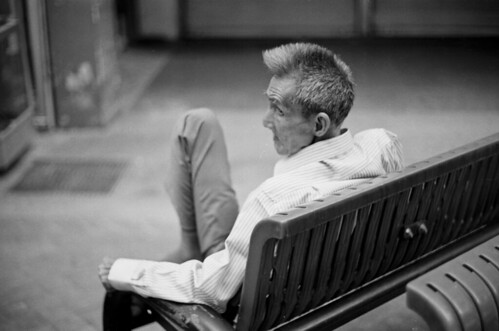
great tone bro. but do u feel that we are exploiting him and calling him a old fart is actually quite rude. Just a question, I believe everyone capture something with a motive. Just keen to find out from u whats yours.
Hi bro, didn't see your post here

As from my Flickr post.
I personally think street photographers in general are exploiting people's rights by taking pictures of them without due permission (in most cases).
As long as its not being used in the wrong way, or commercially without their written permission.
Although I did hesitate a bit before squeezing the shutter off on this shot
I've changed the tag already, although I was using it as its an American term for an old man.
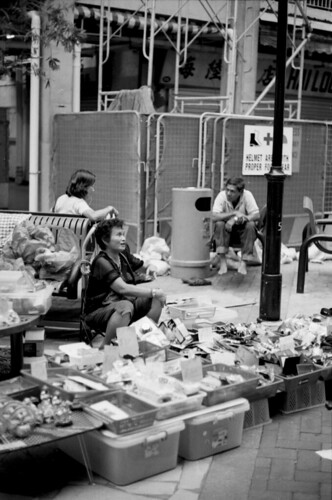
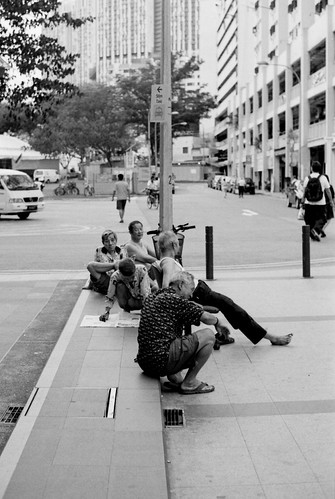
I captured this shot as a testament to the old folks of Singapore, and what they do during their free time during their retirement. Chinese chess, flea market stalls, beer drinking at the hawker centre, snoozing off on benches/chairs what have you.
In terms of taking street shots, I just feel that most of us are exploiting the fact that taking pictures in public areas is not against the law, and that includes taking pictures of people in public spaces as well.
But of course if someone approaches me with regards to a shot I had just taken of him or her, I would gladly delete or not post the shot if that person wants it so.
Hope I've cleared it up, thank you


Allow me to interject alittle here on the issue of photography and social etiquette..
The relationship between the photographer and his subject is indeed one that raises many questions. Street photography, regardless of motive, is at the base level exploitative at the very least. The end product, the photograph, is an interesting portrayal of social dynamics, but it is also on many levels open for interpretation. I believe the main problem here in understanding the concept of 'social etiquette' in photography lies in the problem of objectivity, or rather, the perceived concept of objectivity and the presumption that there is a social, concrete example of what objectivity entails.
Photographers, or anyone for that matter, have to realize that the facade of objectivity is an amalgamation of half-truths, personal subjectivity and biases, encased and protected in a facade of 'objective' social rules, hence realizable and thus ultimately concrete and unassailable in nature. Bourdieu has written extensively on photography and once argued that, 'Only a naive realism sees the photographic representation of reality as realistic; if it appears objective, it is because the rules defining its social use conform to the social defintion of objectivity. Herein lies the paradox of the camera because it can both obscure and reveal, both at once, revealing a fundamental conundrum in our logic because we assume that what the camera reveals is true because we can see it.
What i'm trying to say here is that the camera and the photograph it produces can never be objective in nature. Insofar that one views photography, especially street photography, as exploitative in nature, it is because one is forced to act within the rigours of a social contract that informs the individual that there is an empirical truth, a formulae if you may, to how people must conduct themselves.
The relationship between the photographer and his subject is indeed one that raises many questions. Street photography, regardless of motive, is at the base level exploitative at the very least. The end product, the photograph, is an interesting portrayal of social dynamics, but it is also on many levels open for interpretation. I believe the main problem here in understanding the concept of 'social etiquette' in photography lies in the problem of objectivity, or rather, the perceived concept of objectivity and the presumption that there is a social, concrete example of what objectivity entails.
Photographers, or anyone for that matter, have to realize that the facade of objectivity is an amalgamation of half-truths, personal subjectivity and biases, encased and protected in a facade of 'objective' social rules, hence realizable and thus ultimately concrete and unassailable in nature. Bourdieu has written extensively on photography and once argued that, 'Only a naive realism sees the photographic representation of reality as realistic; if it appears objective, it is because the rules defining its social use conform to the social defintion of objectivity. Herein lies the paradox of the camera because it can both obscure and reveal, both at once, revealing a fundamental conundrum in our logic because we assume that what the camera reveals is true because we can see it.
What i'm trying to say here is that the camera and the photograph it produces can never be objective in nature. Insofar that one views photography, especially street photography, as exploitative in nature, it is because one is forced to act within the rigours of a social contract that informs the individual that there is an empirical truth, a formulae if you may, to how people must conduct themselves.

Royale With Cheese
Senior Member
Allow me to interject alittle here on the issue of photography and social etiquette..
The relationship between the photographer and his subject is indeed one that raises many questions. Street photography, regardless of motive, is at the base level exploitative at the very least. The end product, the photograph, is an interesting portrayal of social dynamics, but it is also on many levels open for interpretation. I believe the main problem here in understanding the concept of 'social etiquette' in photography lies in the problem of objectivity, or rather, the perceived concept of objectivity and the presumption that there is a social, concrete example of what objectivity entails.
Photographers, or anyone for that matter, have to realize that the facade of objectivity is an amalgamation of half-truths, personal subjectivity and biases, encased and protected in a facade of 'objective' social rules, hence realizable and thus ultimately concrete and unassailable in nature. Bourdieu has written extensively on photography and once argued that, 'Only a naive realism sees the photographic representation of reality as realistic; if it appears objective, it is because the rules defining its social use conform to the social defintion of objectivity. Herein lies the paradox of the camera because it can both obscure and reveal, both at once, revealing a fundamental conundrum in our logic because we assume that what the camera reveals is true because we can see it.
What i'm trying to say here is that the camera and the photograph it produces can never be objective in nature. Insofar that one views photography, especially street photography, as exploitative in nature, it is because one is forced to act within the rigours of a social contract that informs the individual that there is an empirical truth, a formulae if you may, to how people must conduct themselves.
:thumbsup:
Well said.
My english isnt so good to do such a write up really, didnt pay attention in school when I was a kid

I always believe, a person's pic reflect alot of his character and how he view and sees things.
I am just good in meaningless pics that keeps me busy when I got nothing to do. But thanks for answering Bro. Just keen to know what ur motive in shooting the uncle and tagging him "old fart" .
Leica film
I am just good in meaningless pics that keeps me busy when I got nothing to do. But thanks for answering Bro. Just keen to know what ur motive in shooting the uncle and tagging him "old fart" .
Leica film
Last edited:
Royale With Cheese
Senior Member
I am just good in meaningless pics that keeps me busy when I got nothing to do.
boss, you are hidden talent :thumbsup:

sharkymachine
Senior Member
Canon 7sz- f0.95
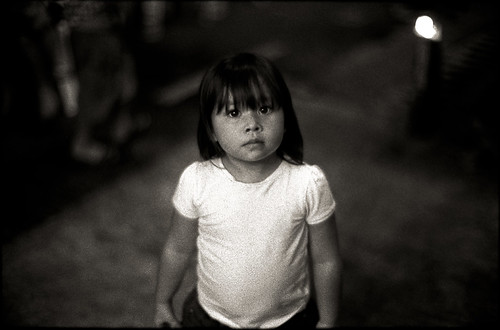
always like the 0.95
the gal seems like walking out from the picture
I always believe, a person's pic reflect alot of his character and how he view and sees things.
I am just good in meaningless pics that keeps me busy when I got nothing to do. But thanks for answering Bro. Just keen to know what ur motive in shooting the uncle and tagging him "old fart" .
No problem bro, above all you must enjoy what you are doing.
For me, when I shoot I always feel a tad eccentric, shooting whatever feels right at that point in time. Sometimes I can sit and wait for a shot while other times I am just trigger happy.
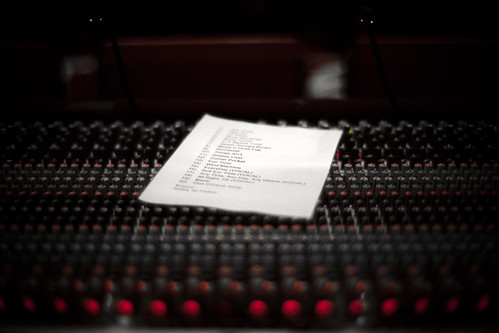
An abstract shot for you guys today.
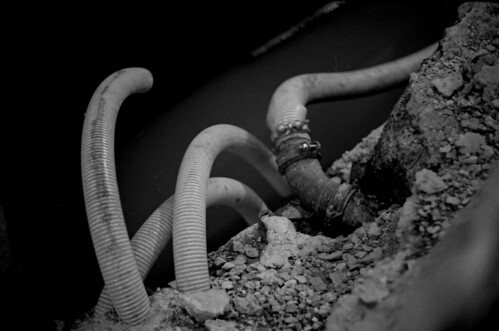

i think this got overlooked during all the talk about etiquette. another great image from the master. the tone and texture

rgy1993: how come theres a purple tinge on the images? looks like not enough washing or hypo..
i think this got overlooked during all the talk about etiquette. another great image from the master. the tone and texture
rgy1993: how come theres a purple tinge on the images? looks like not enough washing or hypo..
Yeah, love the pic! How come there's so much texture on the slippers?

rgy1993
Deregistered
i think this got overlooked during all the talk about etiquette. another great image from the master. the tone and texture
rgy1993: how come theres a purple tinge on the images? looks like not enough washing or hypo..
mm duno seems to be the scanning...
ill have another go at a few more rolls next week
mm duno seems to be the scanning...
ill have another go at a few more rolls next week
Scanning? Did you change the mode to b&w? :think:
You might scan it on color mode. Color mode give you purple tone.
///
Royale With Cheese
Senior Member

AGFA APX 400
HC-110, 6mins, Dilution B
Dont know why got some ghosting on the left, sian.............

Scanning? Did you change the mode to b&w? :think:
You might scan it on color mode. Color mode give you purple tone.
///
Thanks.
the original pix didnt look good at all. couldnt figured out why. left it aside for a week..
i scanned bnw film with color mode. on purpose. get a bit of surprise sometimes. like this pix. unsaturated to monochrome or add other tone if needed. either before or after burning/doghing or contrast adjustment.. depend on mood of the day.
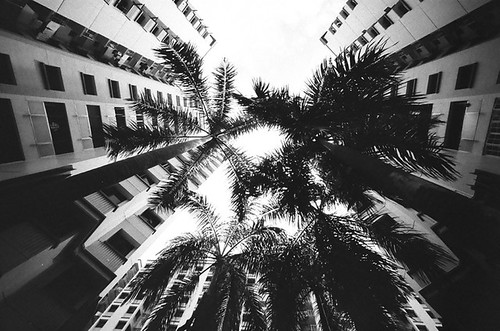
always like the 0.95
the gal seems like walking out from the picture
thanks bro
Canon 7sz with f0.95
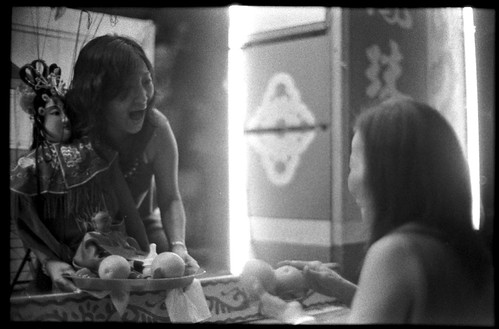
Leica film f0.95 tv version

Last edited:
Royale With Cheese
Senior Member
thanks bro
Leica film f0.95 tv version
Good stuff :thumbsup::thumbsup::thumbsup:
- Status
- Not open for further replies.
Similar threads

- Replies
- 0
- Views
- 166
- Replies
- 0
- Views
- 231
- Replies
- 0
- Views
- 1K
- Replies
- 0
- Views
- 1K