[pinholecam] Wandering in Tokyo


#41
9642429677_ecccab57bb_b.jpg


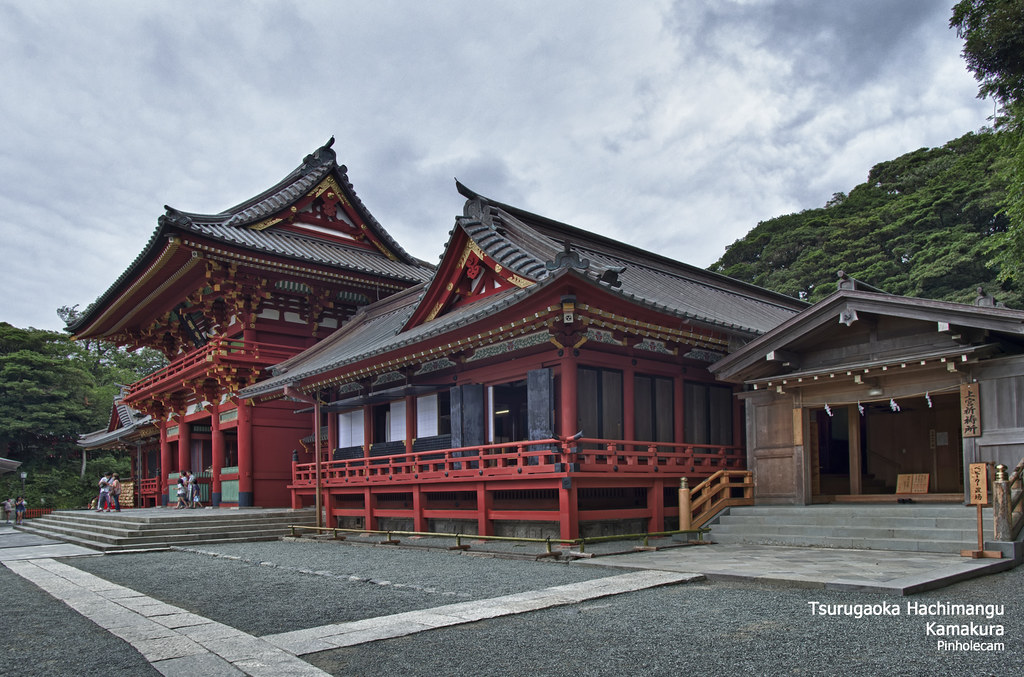
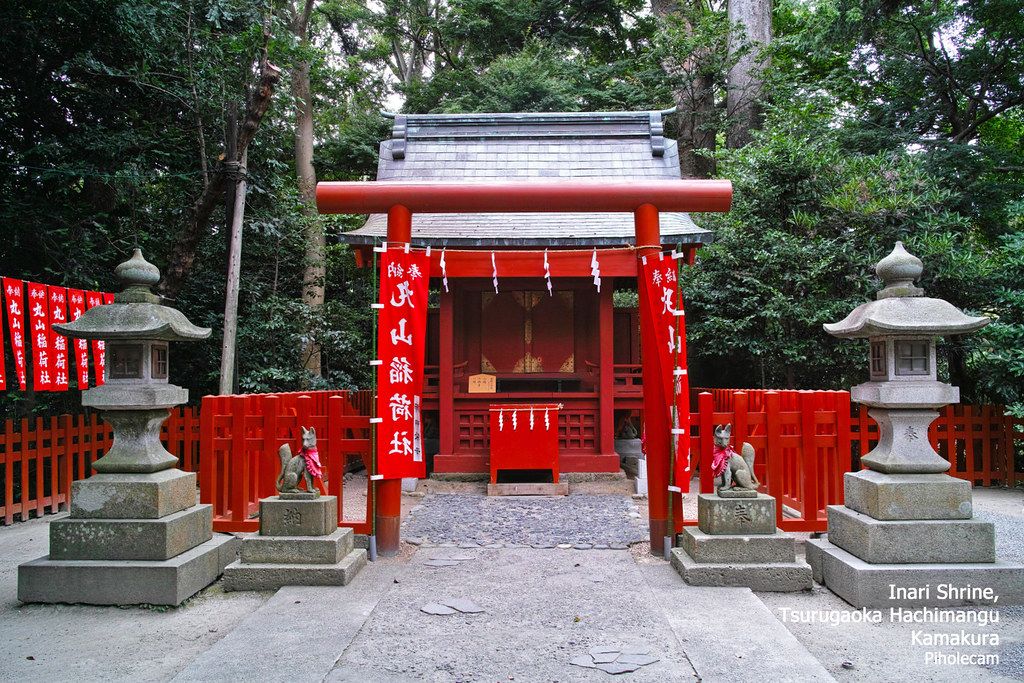
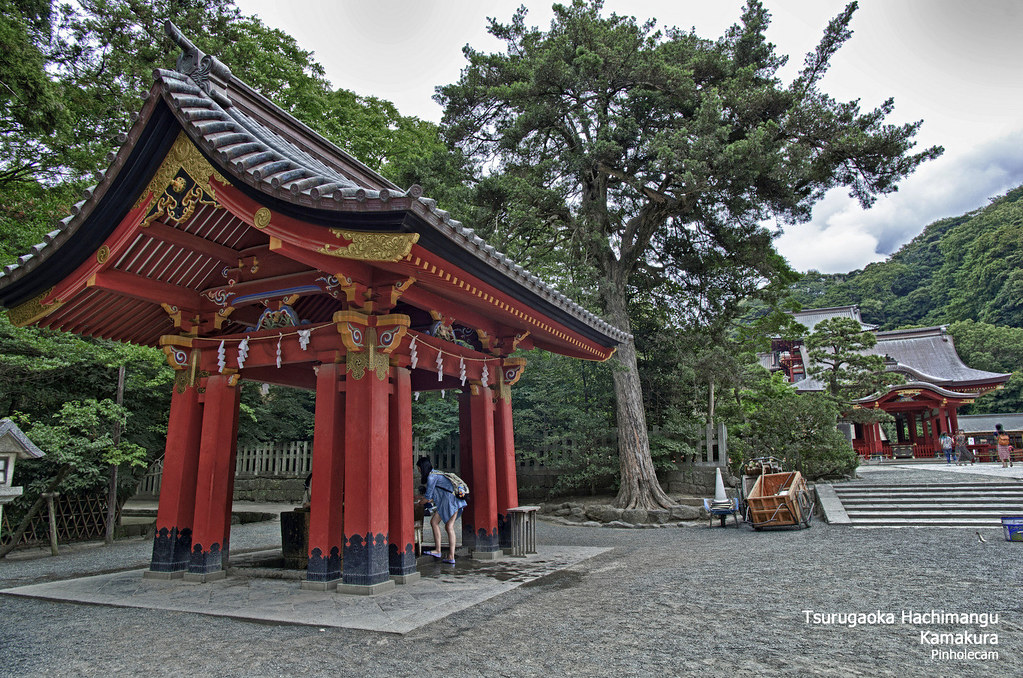
Tsurugaoka Hachimangu is Kamakura's most important shrine, dating back to 1180 (current site)
The path to the shrine is impressive, lined with cherry blossom trees all the way to the torri of the shrine (photo #40).
I can only imagine the sight in spring (and even autumn).
Its summer in my case, so its all just green leaves.

Its certainly worth a visit, but I was disappointed from a photographer's standpoint.
Even with the not so cheap entrance fee, no photos are allowed within the shrine itself. (outer compound is alright)
This is usually understandable, if its flash photography but it overzealous to me if it extends to non-flash photos and inner compound. (usually its only the interior for most places)
So a bit disappointing to have enthusiasm build up from walking the long distance from main torri > outer grounds > up the steps > shrine and find out that photos are not allowed.
They are also concerned if the photographer has a tripod because its a private ground and they don't want photographers selling photos of the place.
The latter can be cleared up easily with security by just telling them that you are not a commercial photographer.
 

Last edited:
#44
9656186306_67ae658420_b.jpg


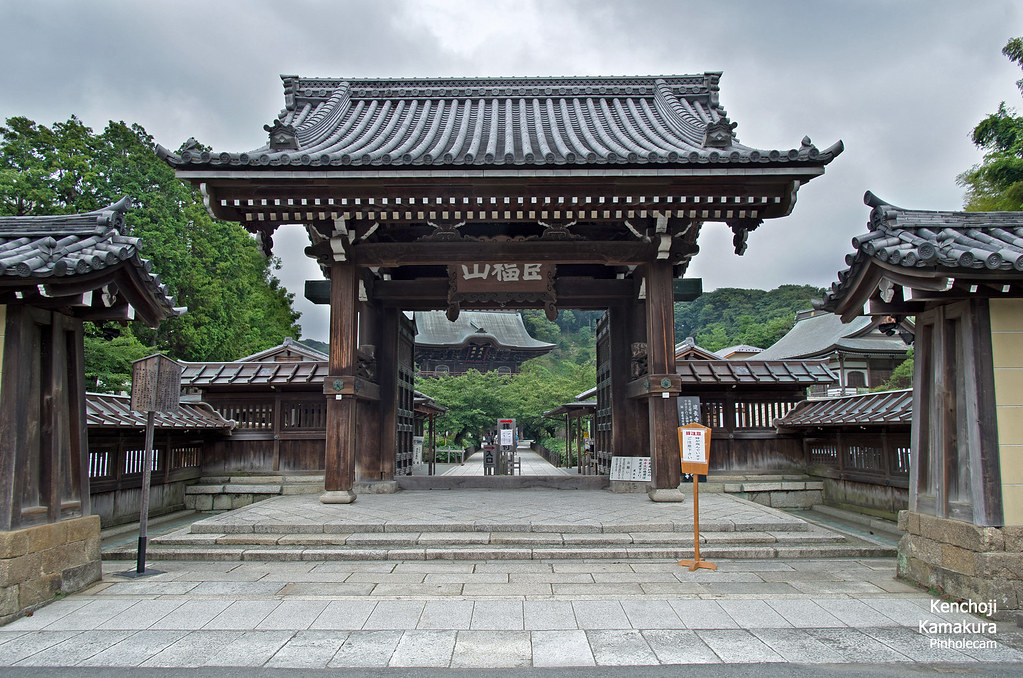
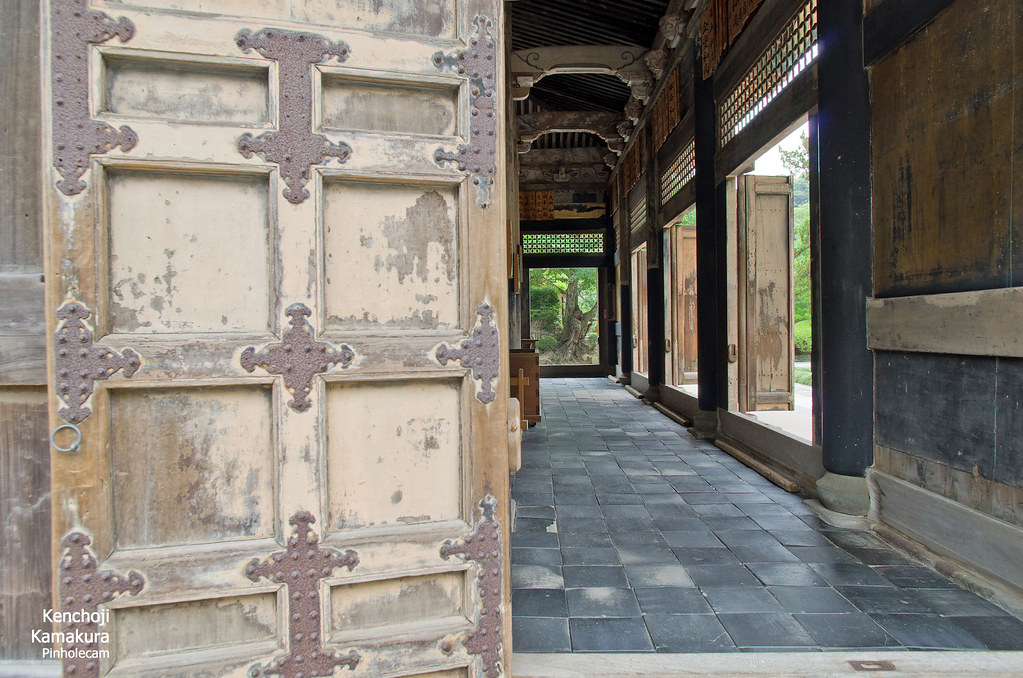
Kenchoji is the number one of Kamakura's five great Zen temples and its oldest.
Founded in 1253, its first head priest was Rankei Doryu, a zen priest from China.
As can be seen, the zen temples are typically bland in color compared to the reds of the Shinto temples.

Its a 10-15min walk from Tsurugaoka Hachimangu or 10-15min walk from Kita-Kamakura station.
In hindsight, its probably better to start early, drop off at Kita-Kamakura station (2nd last stop) and visit the 3 temples along the way including Kenchoji, then make the way to Tsurugaoka Hachimangu and by then, its probably late noon and one can easily have lunch nearer the town center, followed by taking a bus/rail to the other sights in Kamakura.
 

#45
9652946729_a02ea965f8_b.jpg


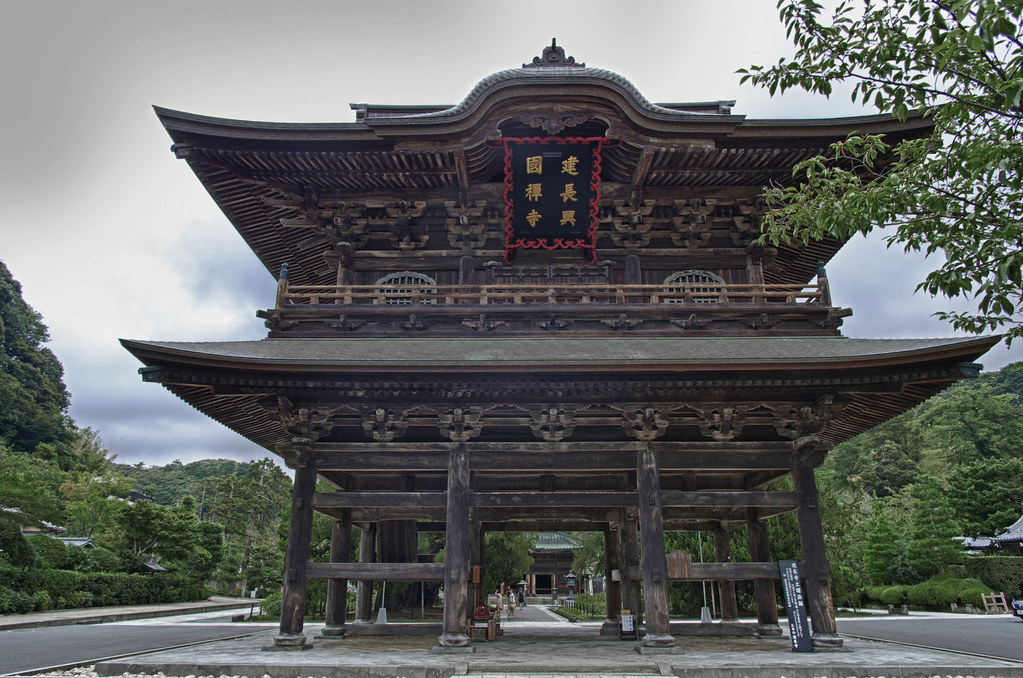
This is a nice temple to visit, both as a sightseer or a photographer.
Quiet and less people, and no restrictions to photography.
Very nice temple and surroundings too.
I'd think there are many others in Kamakura, as there are so many temples/shrines in the area.
But this is one of the ones I managed to visit and certainly a nice one at that.
 

#46
9656192312_54b2dd9b3f_b.jpg


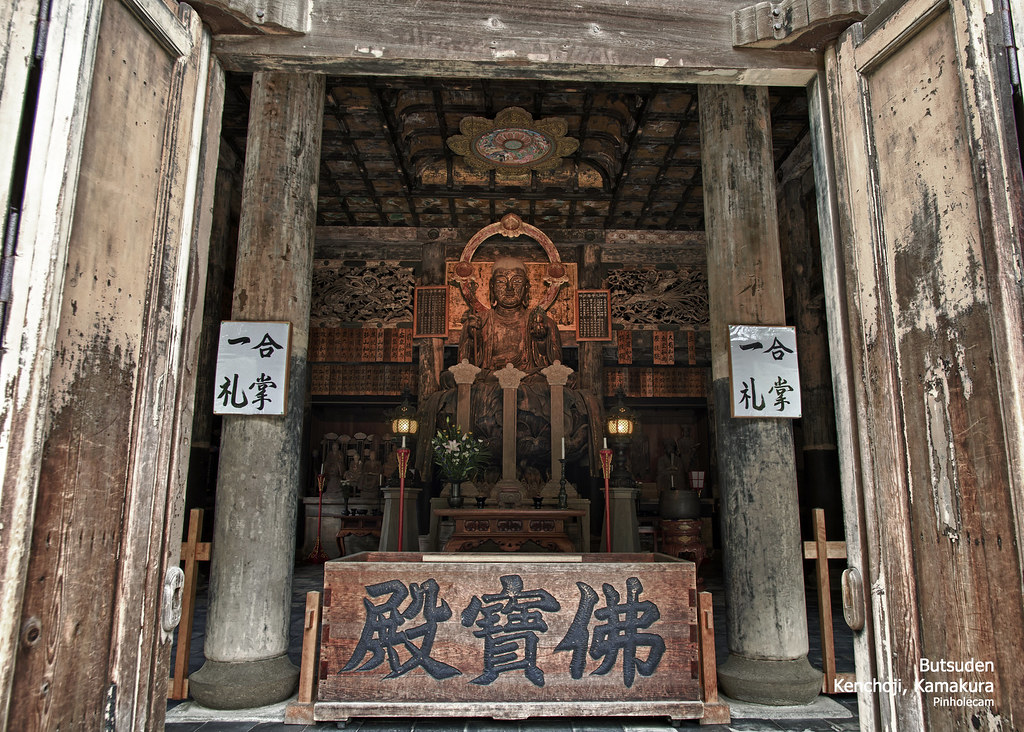
This is the first temple hall, the Butsuden (Buddha Hall) which displays a statue of the Jizo Bodhisattva.
Interestingly, the Butsuden was moved here in 1647 from Zojoji in Tokyo, a temple I would visit later on when I returned to Tokyo.
 

#48
9669055100_2a9129a0e6_b.jpg


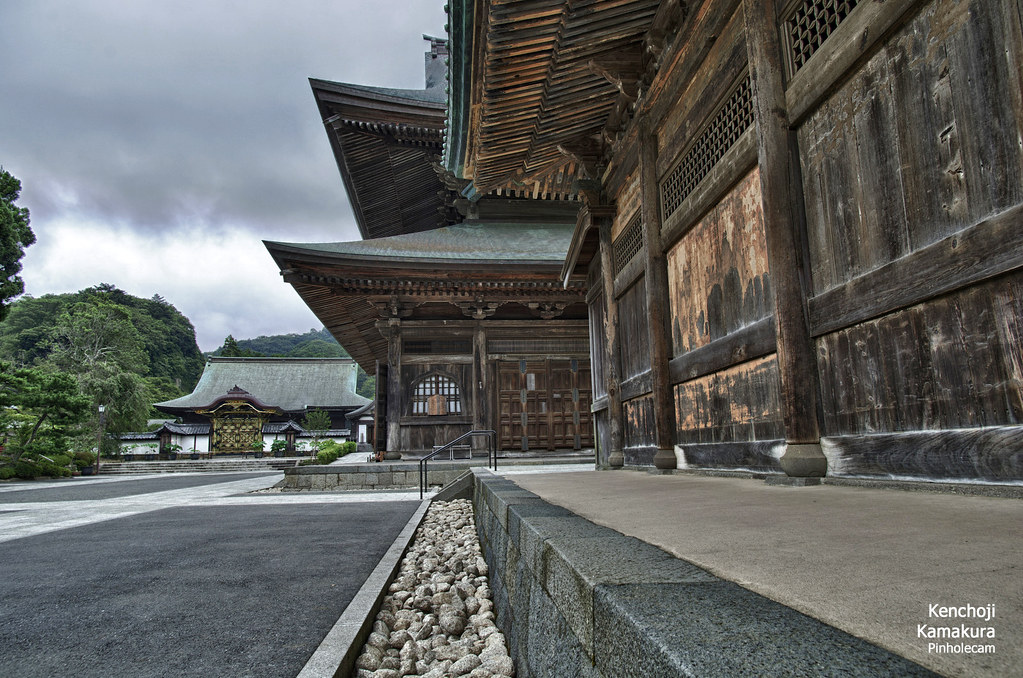
The building in the middle of the photo is the Hatto (Dharma Hall).
Its the largest Buddhist wooden structure in Eastern Japan.
 

Bro, mind me asking if most of your shots are single exposure shots or you blended with 2-3 exposures? :)
The colours in each picture, ranging from the sky and clouds to the architectural structures are so vibrant! :)
 

Bro, mind me asking if most of your shots are single exposure shots or you blended with 2-3 exposures? :)
The colours in each picture, ranging from the sky and clouds to the architectural structures are so vibrant! :)

No probs, most are multi exposure, either HDR or exp blended.
The Sun and shaded parts (esp the dark wood Zen temples) needed to be exposed separately from the sky, so at the minimum, I'll need the 0ev and -2ev frames.
 

#49
9669052994_7ba0162d26_b.jpg


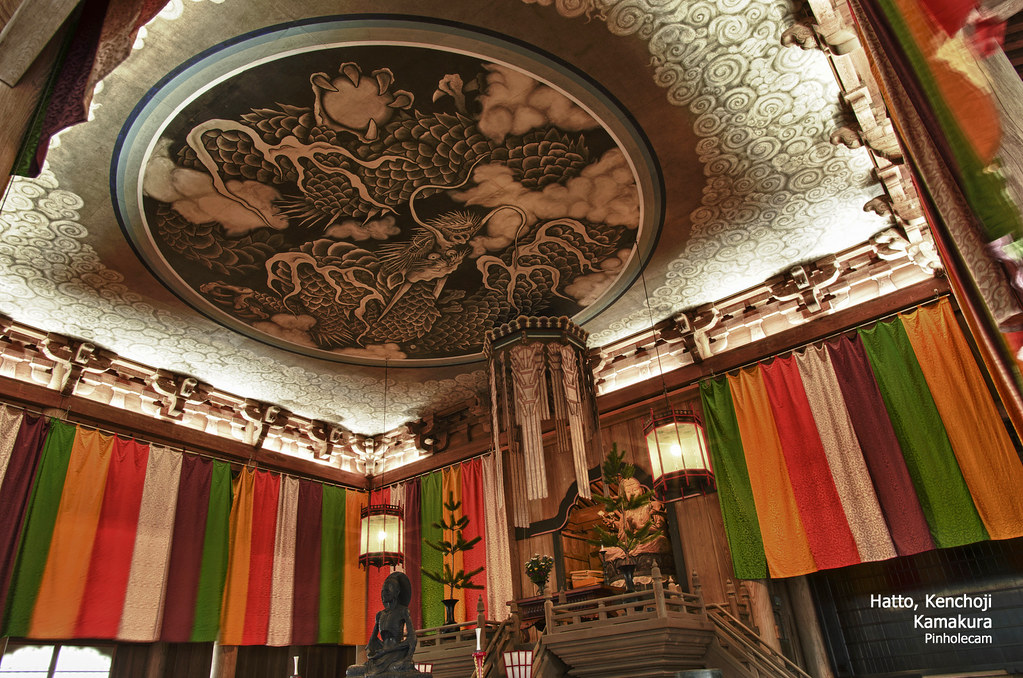
This is the Hatto (Dharma Hall), the largest wooden temple building in eastern Japan.
It houses a statue of Kannon and has a dragon painted on its ceiling.

There is a hill to the side of the temple grounds that leads up to a high vantage point that oversees the temple, but I did not know of it before hand and the poor weather dissuaded me from exploring the route.
Certainly worth a try a visitor during better weather.
 

Last edited:
#50
9670392979_bd7b16bbd2_c.jpg


By the time I finished at Kenchoji, it was noon (lunch), but there was no dining area in sight, and a bus wait was quite long too.
So I made my way to the next nearest temple, which would also take me nearer to Kita-Kamakura train station where I could hop on later to get back to the town center.

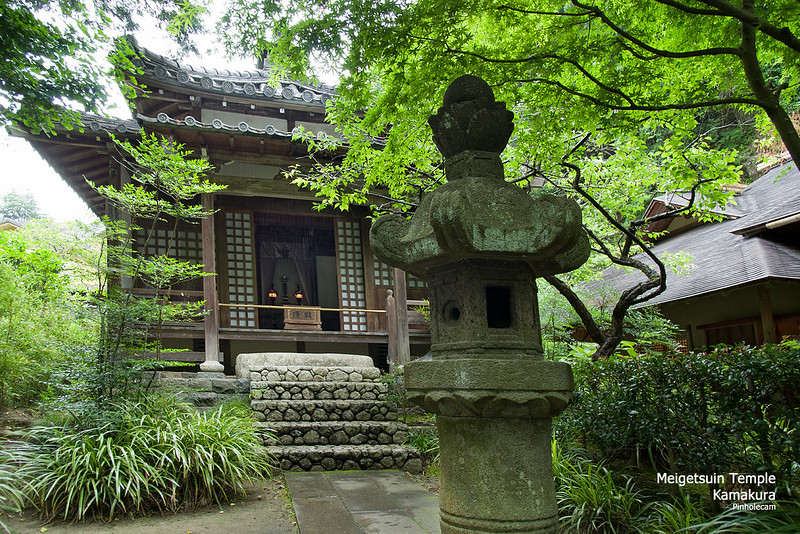
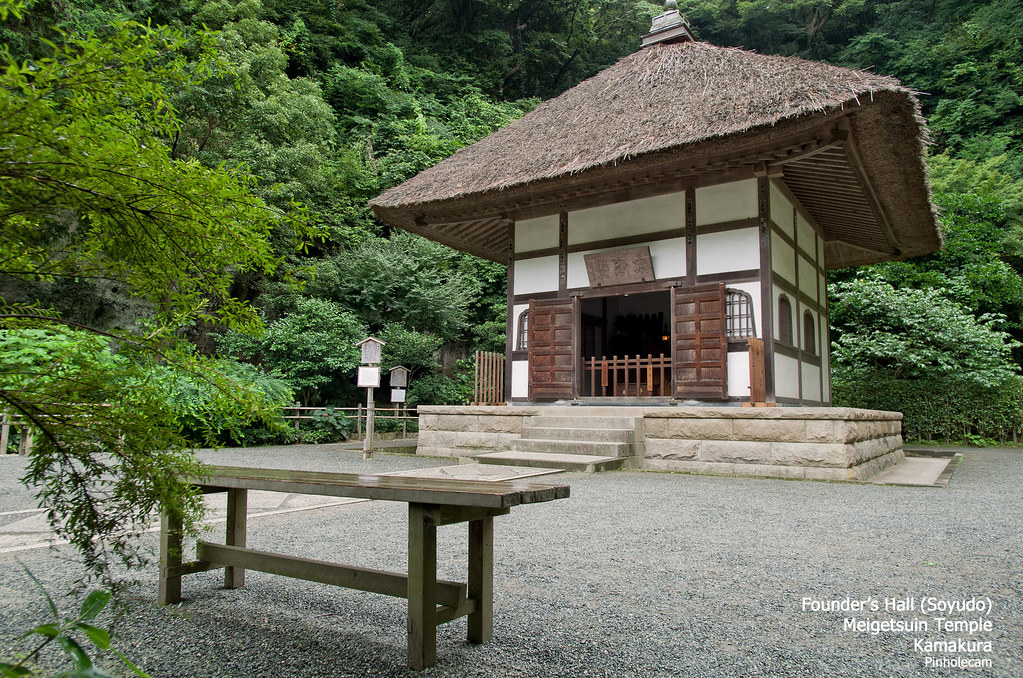
This is Meigetsuin Temple, a temple of the Rinzai Zen Sect founded in 1160 in Kamakura.
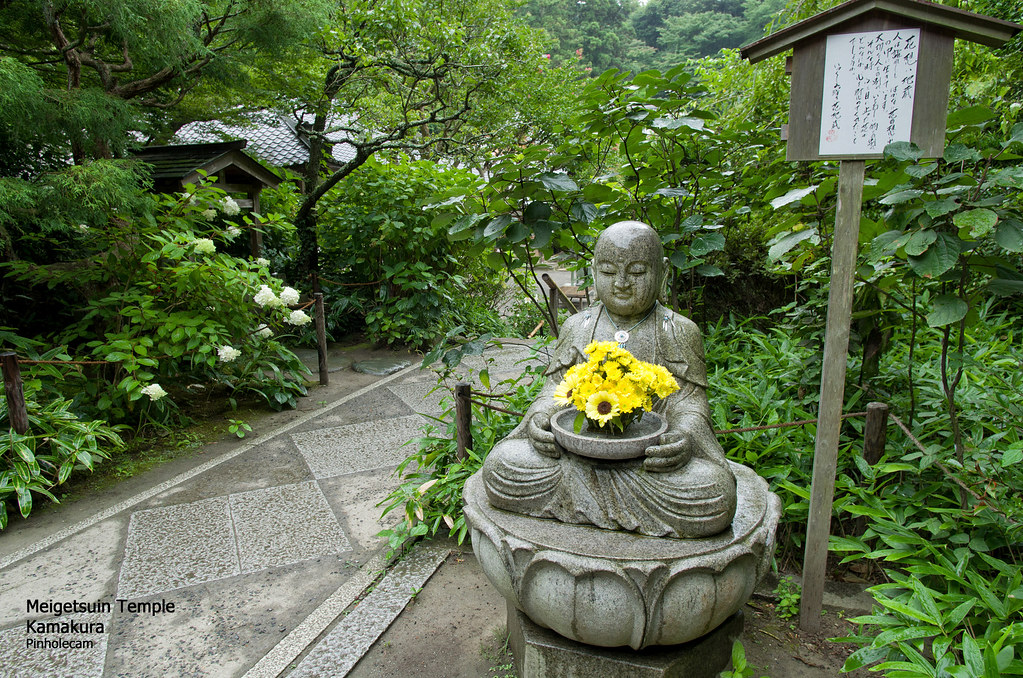
It is also known as Hydrangea Temple because hydrangea blooms during the rainy season around June.
In fact, its supposed to have different flower blooms throughout the year.
However, I wasn't that lucky and there was no blooms at all.

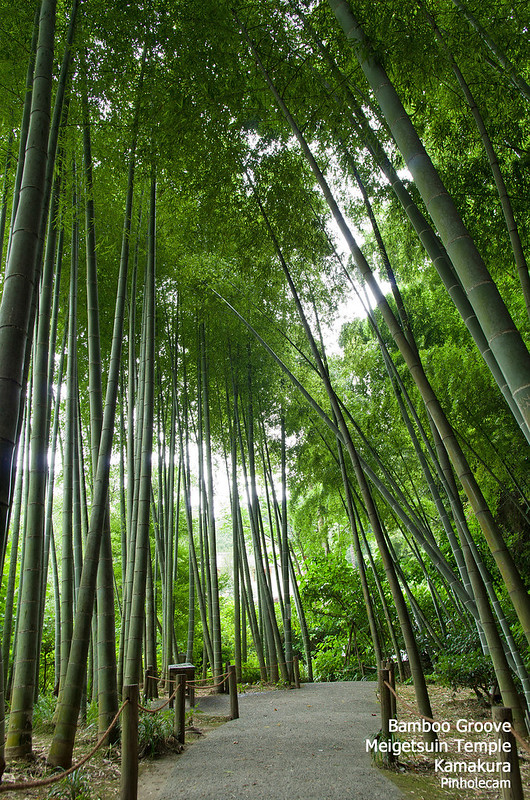
Its quite a different temple from the other two I visited, more subtle, not grand, more like a garden temple.
 

#51
9670384675_306c7aee53_b.jpg


This is a nice smaller temple and certainly worth a visit, especially if one can catch the blooms.
But from a photographers pov, its again a bit quirky.
Its does not allow tripods.
Really odd to me since as can be seen, the tripod would end up on the pavement or natural ground.

Rain was pelting all the way, from my walk from Kenchoji and thru the whole session in Meigetsuin.
I generally had to let the raindrops pelt on the back of my camera which was weather sealed while avoiding it on the lens which was not (and I did not want to clean the lens elements of water anyway)
I count myself lucky that it was never heavy enough to make shooting impossible.
 

Last edited:
#55
9680475421_a0a93d8195_b.jpg


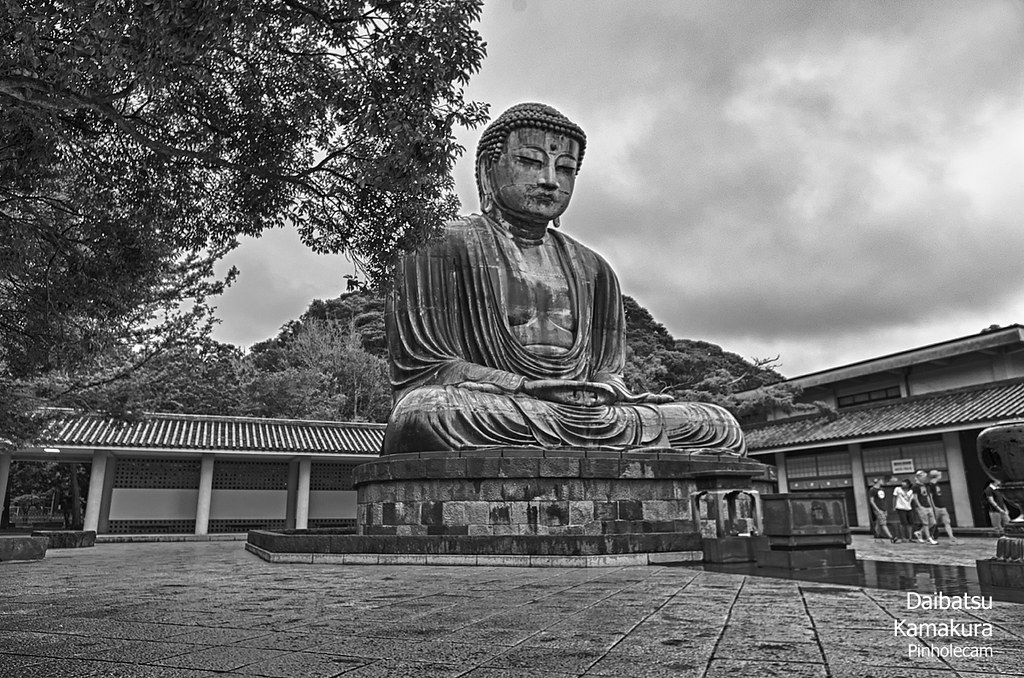
The day/light was ending fast when I reached my last destination in Kamakura.
The Great Buddha of Kamakura (Kamakura Daibutsu) is a bronze statue which stands on the grounds of Kotokuin Temple.
It is the second tallest bronze Buddha statue in Japan, surpassed only by the statue in Nara's Todaiji Temple.


Most temples close at about 5pm, and with the gloomy weather, the light faded fast, but no visit would be complete without a visit to the Daibutsu.
It is cited some distance away from the Kamakura town center and has to be accessed via a separate train, so for the future traveller, pls take into account the perhaps 20mins of train time (+waiting) and 10mins walking time it takes to get there.
Especially so during days where the daylight hours are short and there is so much to cover in Kamakura.
 

Back
Top