kenkotokinaa
New Member
Achieving consistent exposure under changing light remains a core challenge in video production. A variable nd filter offers a practical way to manage brightness at the lens level, supporting controlled shutter speed, balanced aperture selection, and stable color output. In professional filmmaking workflows, this tool supports creative intent during location shoots, studio setups, and hybrid DSLR or mirrorless camera use. By placing adjustable neutral density glass in front of the lens, filmmakers gain refined control without altering core camera settings.
This article explains how variable ND technology supports exposure precision, motion rendering, and visual consistency across demanding production environments.
Common exposure issues include:
variable nd filter vs fixed nd filter
Variable ND advantages:
Use cases include:
Key optical features:
Compatibility highlights:
Production scenarios:
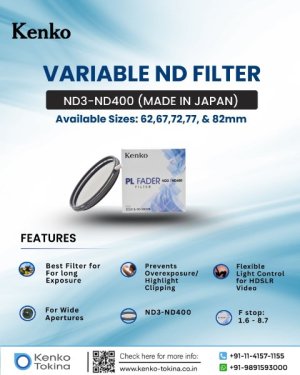
According to product information from Kenko Tokina India, Kenko variable ND filters are built to support professional shooting environments while maintaining image clarity and consistent performance.
Consider these points:
Best practices:
Filmmakers seeking consistent results often integrate variable ND filters into everyday kits, especially for outdoor and location based projects.
For professionals seeking reliable filtration backed by optical expertise, Kenko Tokina India offers a curated range of variable ND filters designed for professional use. Explore the Kenko variable ND filter range through Kenko Tokina India to find a solution aligned with your filmmaking workflow. For detailed product specifications and purchase assistance, connect with Kenko Tokina India through their official platform and dealer network.
This article explains how variable ND technology supports exposure precision, motion rendering, and visual consistency across demanding production environments.
Understanding Variable ND Filter Technology
A variable ND filter operates through two polarizing elements mounted within a rotating frame. As the front ring turns, light transmission reduces or increases across a defined stop range. This design allows continuous exposure adjustment instead of swapping multiple fixed filters.how variable nd filter works
- Two optical polarizers regulate incoming light.
- Rotation changes light attenuation in real time.
- Color neutrality remains stable when optical coatings are engineered correctly.
- Exposure shifts without affecting ISO or shutter speed.
Exposure Control Challenges in Filmmaking
Cinematic video depends on controlled motion blur and depth of field. Bright environments often push cameras toward high shutter speeds or closed apertures, leading to unnatural motion or excessive sharpness. A variable ND filter exposure control solution allows cinematographers to hold shutter speed near cinematic standards while managing brightness optically.Common exposure issues include:
- Overexposed highlights in daylight.
- Inconsistent brightness during moving shots.
- Limited aperture flexibility.
- Rapid lighting changes during outdoor filming.
Benefits of Variable ND Filters for Professional Video
Smooth Exposure Transitions
A variable nd filter for professional video supports gradual exposure shifts during continuous recording. This matters during walk and talk scenes, drone footage, or documentary filming where lighting conditions change quickly.Aperture Freedom
Shallow depth of field often defines cinematic style. A variable nd filter for cinematography allows wide apertures under bright light, preserving subject separation without forced compromises.Shutter Speed Stability
Maintaining motion cadence depends on consistent shutter values. A variable nd filter for filmmaking keeps motion rendering natural by preventing unwanted shutter adjustments.Workflow Efficiency
Lens mounted control removes the need to swap filters, reducing setup time and minimizing dust risk on location.Variable ND Filter vs Fixed ND Filter
Understanding the difference between adjustable and fixed density filters helps in selecting the right tool.variable nd filter vs fixed nd filter
Variable ND advantages:
- Continuous density adjustment.
- Reduced filter swaps.
- Faster response during dynamic shoots.
- Single density precision.
- Zero risk of cross polarization.
- Preferred for controlled lighting setups.
Outdoor Filmmaking and Changing Light
A variable nd filter for outdoor shooting performs well during daylight scenes involving sun movement, clouds, or reflective surfaces. Outdoor filming often shifts from shade to direct sun within seconds. Rotational control allows exposure correction without stopping the shot.Use cases include:
- Travel documentaries.
- Commercial shoots on location.
- Event videography.
- Nature and wildlife filming.
Image Quality Considerations
High quality glass and multi layer coatings play a major role in maintaining clarity. A professional variable nd filter uses optical grade materials to limit color cast, ghosting, and flare.Key optical features:
- Neutral color reproduction.
- Low reflection coatings.
- High contrast retention.
- Minimal vignetting on wide lenses.
Compatibility with DSLR and Mirrorless Cameras
A variable nd filter for DSLR and mirrorless cameras integrates easily across camera platforms. With correct filter thread sizing, a single filter may cover multiple lenses using step up rings.Compatibility highlights:
- Works with full frame and APS C sensors.
- Supports autofocus and metering.
- Ideal for video centric mirrorless bodies.
- Maintains balance on gimbals and rigs.
Variable ND Filters in Commercial and Narrative Production
Professional sets demand predictable performance. A variable nd filter for professional video supports consistent exposure across multiple takes, camera angles, and lenses.Production scenarios:
- Commercial advertising shoots.
- Short films and feature production.
- Corporate and branded video.
- Studio interviews with window light.
Kenko Variable ND Filter Design Approach
Kenko variable ND filters use precision engineered polarizing layers and advanced coatings. These filters focus on optical accuracy, smooth rotation, and durability under production use. The design aims to support stable color balance and reliable density control across the adjustment range.According to product information from Kenko Tokina India, Kenko variable ND filters are built to support professional shooting environments while maintaining image clarity and consistent performance.
Choosing the Right Variable ND Filter
Selecting a filter involves matching shooting style and lens requirements.Consider these points:
- Density range suitable for lighting conditions.
- Filter diameter compatibility.
- Coating quality for flare control.
- Smooth rotation mechanism.
Care and Handling
Proper handling supports long term optical performance.Best practices:
- Clean with microfiber cloths.
- Store in protective cases.
- Avoid stacking with polarizers.
- Check rotation smoothness regularly.
Role of Variable ND Filters in Modern Filmmaking
Modern filmmaking relies on speed, precision, and repeatable results. Variable ND filters meet these expectations by offering direct exposure control without interrupting shooting rhythm. As cameras continue to advance in resolution and dynamic range, optical filtration remains a core part of professional imaging.Filmmakers seeking consistent results often integrate variable ND filters into everyday kits, especially for outdoor and location based projects.
FAQs
Q.1 What makes a variable ND filter different from fixed ND filters?
A variable ND filter allows continuous adjustment across multiple stops, while fixed ND filters offer one preset density.Q.2 Can a variable ND filter affect color accuracy?
High quality models maintain neutral color when coatings and optical alignment are precise.Q.3 Is a variable ND filter suitable for cinema cameras?
Yes, many professionals use variable ND filters with cinema cameras during location shoots and fast paced production.Q.4 Does a variable ND filter work for still photography?
It works well for long exposure photography and wide aperture shooting in bright light.Q.5 How many stops should a variable ND filter cover?
Coverage between two and eight stops suits most daylight filming needs.Final Thoughts and Buying Guidance
A variable ND filter remains a practical tool for filmmakers who value speed, control, and optical consistency. Its role in exposure management supports cinematic motion, controlled depth of field, and stable color output across production styles.For professionals seeking reliable filtration backed by optical expertise, Kenko Tokina India offers a curated range of variable ND filters designed for professional use. Explore the Kenko variable ND filter range through Kenko Tokina India to find a solution aligned with your filmmaking workflow. For detailed product specifications and purchase assistance, connect with Kenko Tokina India through their official platform and dealer network.